
Also Read
People are used to interfaces that react immediately and recover quietly when connectivity changes. A table-based game therefore has to combine the responsiveness of a local app with the consistency of a shared online system. That means synchronizing state, protecting the order of events and making temporary network problems almost invisible. What looks like a small game screen is actually a distributed system with unusually demanding timing and interface constraints.
Why playing poker on mobile depends on a smooth, responsive experience
The way you play poker shapes how the game feels, and that feeling is different when people play poker on mobile. Instead of sitting in front of a large screen, players are often checking the table between other tasks, holding the device in one hand, switching networks, or returning after briefly locking the screen. That makes convenience a major part of the experience. The game has to remain clear, quick, and easy to follow, even when the surrounding conditions change.
For mobile poker, every action needs to feel immediate. A player should be able to check, call, raise, or fold without wondering whether the tap has registered. Cards, chip amounts, turn indicators, and timers also need to remain easy to read on a small display. Good mobile design reduces friction so that attention stays on the hand rather than on navigating the interface.
The mobile format also changes how information is presented. A phone cannot display every element at the same size as a desktop screen, so the most important details must take priority. Betting controls need enough space for accurate taps, while cards and table information must remain visible without making the screen feel crowded. Portrait and landscape layouts may also need different arrangements.
The engineering behind each poker hand
Behind the visible table, poker game engineering has to keep every action in the correct order. The system tracks cards, wagers, player turns, timers, and pot values while ensuring that every connected device receives the same game state. It also has to recover cleanly from brief connection changes without disrupting the hand. Much of this work stays invisible, but it is what allows the game to feel continuous and predictable from one action to the next.
Device diversity turns one table into thousands of test cases
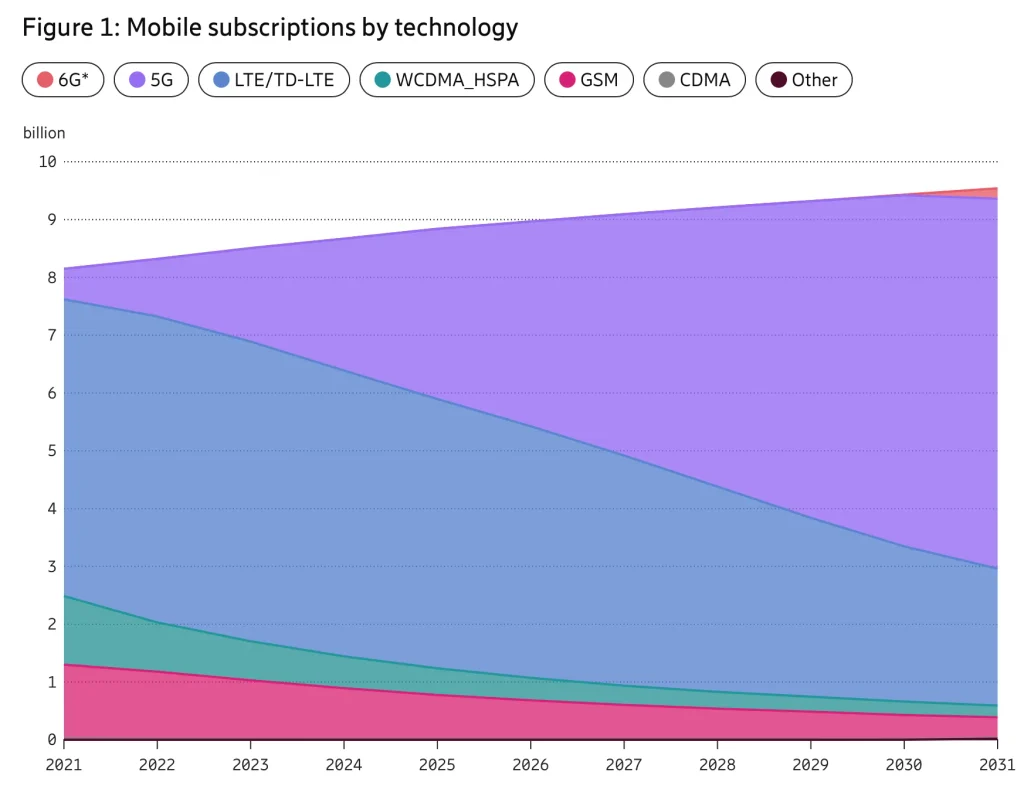
Scale makes those synchronization problems harder because “a phone” is not one predictable hardware target. Global mobile figures for 2025 showed about 7.47 billion smartphone subscriptions and 8.02 billion mobile broadband subscriptions.
| Mobile Indicator | Latest Reported Figure | Engineering Implication |
|---|---|---|
| Smartphone subscriptions, 2025 | 7.47 billion | Large variation in processors, displays, and memory |
| Mobile-broadband subscriptions, 2025 | 8.02 billion | Sessions must work across many connection conditions |
| 5G subscriptions, Q2 2026 | Nearly 3.3 billion | Faster networks are increasingly common but not universal |
| Data traffic per smartphone, 2025 | 22 GB/month | Phones are established as heavy-use connected devices |
| Mobile network traffic growth, Q2 2025–Q2 2026 | 23% | More activity is moving through mobile infrastructure |
The practical consequence is that developers cannot optimize solely for the newest handset on a strong connection. A table may need to render smoothly at different refresh rates, survive memory pressure and preserve its state as network quality changes. High-speed connectivity helps, but it does not eliminate variability inside the device itself.
The real latency budget starts before a packet leaves the phone
Network delay receives most of the attention in online gaming, but an interaction can accumulate latency at several stages:
- Touch sampling
- Operating-system event handling
- Game logic
- Network transfer
- Server processing
- Rendering
- Display refresh
Improving only one stage may therefore produce less visible benefit than expected.
A 2025 study presented at the USENIX Symposium on Networked Systems Design and Implementation measured mobile cloud-gaming systems and found input-to-display delays of 112–403 milliseconds even under good network conditions.
The researchers summarized the problem directly: “all platforms exhibit high interactive latency of 112–403 ms.” Their proposed changes reduced interactive latency by about 34%, bringing it consistently below 100 milliseconds and showing how much delay can originate within the processing pipeline rather than in the connection alone.
Device timing adds another small but meaningful component. A 2025 smartphone timing study noted that touchscreens operating at about 120 Hz introduce roughly 8.3 milliseconds of temporal uncertainty due to their sampling interval. The researchers improved measurement resolution to 4 milliseconds by combining touchscreen and motion-sensor data.
Perceived responsiveness is more than ping
For a turn-based table, those numbers do not mean that every interaction requires the extreme latency targets of a fast-action game. They do show why perceived responsiveness cannot be reduced to “ping.” A tap that feels slow may have spent time waiting for an input sample, a display frame or an internal processing stage before network delay is even considered.
Good mobile engineering, therefore, works with an end-to-end latency budget. Immediate local feedback can acknowledge the touch, while authoritative confirmation arrives separately. That combination makes the interface feel responsive without allowing presentation speed to compromise shared game state.
A convincing pocket-sized table is ultimately a coordination system disguised as a simple interface. Its quality comes from making device variation, interrupted connections and dozens of tiny timing delays largely disappear from the user’s view.

Community Discussion
Join the conversation. Ask questions, share solutions, and help others.
Be the first to start the discussion!